
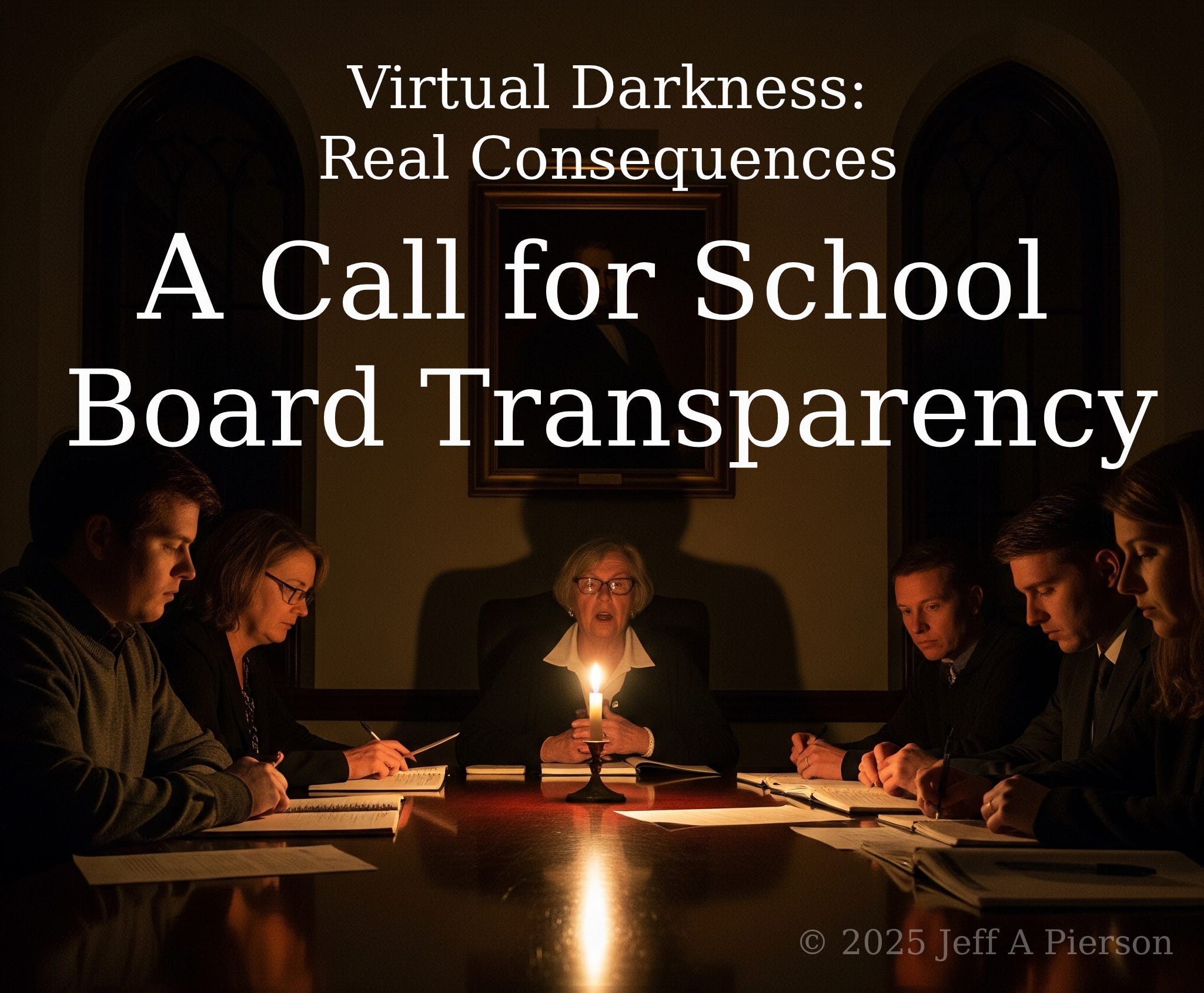
A Call for School Board Transparency Pt. 1
An Update and A Call for Board Transparency

In theory, governing board minutes are meant to be the public’s window into how decisions are made. In practice, what Jerome School District produces is little more than a legal skeleton. The minutes list who was present, which motions were made, and whether they passed. Reports from administrators, such as construction updates, transportation status, or curriculum changes, are often reduced to bullet points with no narrative of what was said, what risks were flagged, or what recommendations were made. For a parent or taxpayer reading after the fact, the “permanent record” is permanently vague.
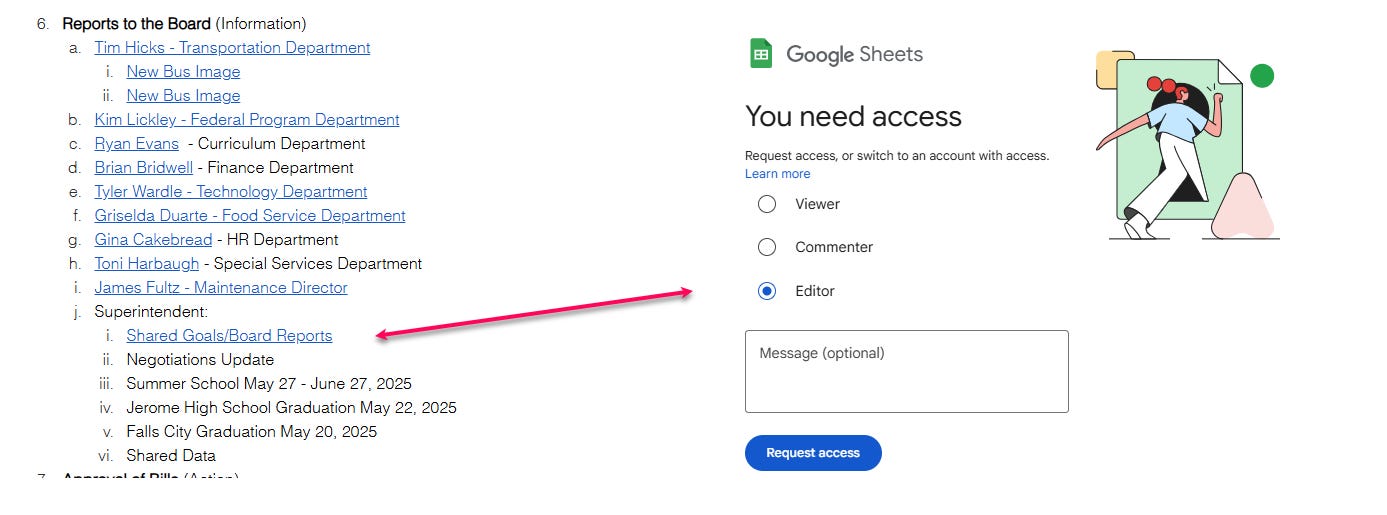
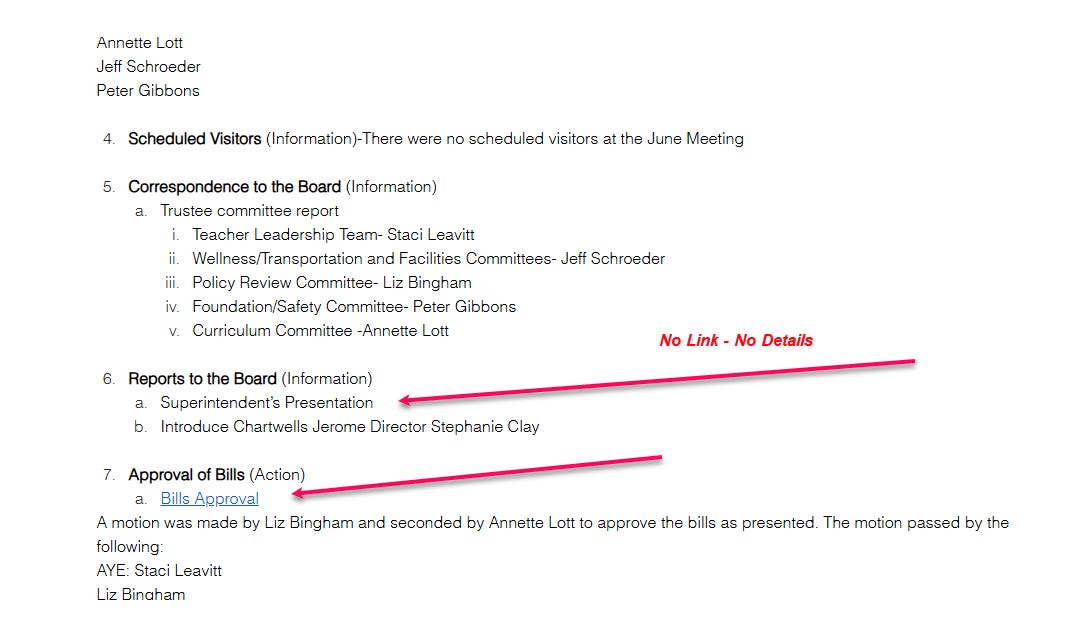
Jerome does link some attachments to its minutes, but even there the practice falls short. Some attachments are restricted from public access (Figure 1), others are nothing more than additional bullet points with no explanatory detail, and minutes older than 12 to 18 months often have the links and reports completely stripped out. In some recent minutes, reports are missing altogether. For example, the June 2025 Minutes - Superintendent’s Report (Figure 2) shows no attachment and provides no indication of what was presented, or whether anything was presented at all.
Even when reports are provided, the level of detail is highly inconsistent. The May 2025 reports make this clear: Federal Programs, Food Service, and Special Services provided thorough, data-driven updates, while the Transportation Director’s May 2025 report was formatted in a narrative style but offered little substantive information. In other words, some departments provide transparency while others provide little more than promotional summaries.
In my opinioin, this is by design , serving as a form of risk management and liability avoidance, and creating deliberate opacity. Idaho law requires very little in meeting minutes: attendance, motions, and votes. By sticking to that minimum, boards protect themselves from liability. A stripped-down record cannot be used to question a trustee’s reasoning, highlight contradictions, or hold leaders accountable for words spoken in the heat of a meeting. But what is legally sufficient can still be ethically hollow. When reports are reduced to one-line bullets, missing altogether, or stripped of meaningful data, there is no way to connect them to later decisions. A superintendent might present serious safety concerns, and the board might take action, but the official record will never show why.
Idaho law may tolerate vague minutes, but other states and open-government advocates have demanded far more.
End Part 1
Read Part 2: Best Practice and Legal Standards for Meeting Minutes

Related


Disclaimer
This article is public commentary offered under the protections of the First Amendment. It reflects the author’s analysis, opinions, and interpretations based on publicly available records, news reports, and official communications. Nothing in this article should be taken as legal advice or as a definitive statement of fact beyond the cited sources. Readers are encouraged to consult original documents and reach their own conclusions. Any errors will be corrected if brought to the author’s attention.