


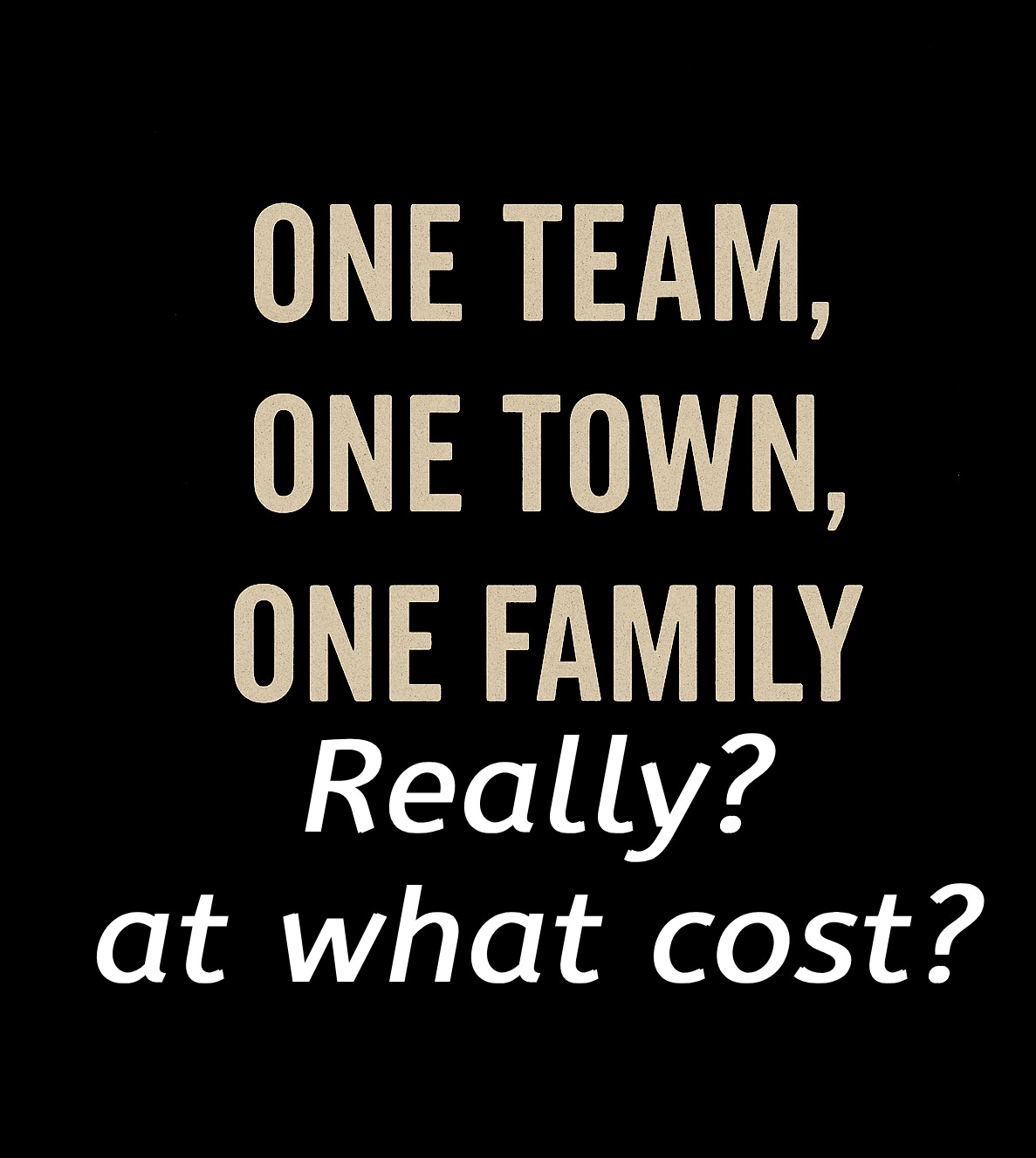
When government fails, the public has two options: to go along, or to hold leaders accountable. In Jerome, the August 2025 transportation collapse revealed how easy it can be for officials to guide the community toward compliance rather than scrutiny. Parents were told the crisis was about “repairs” and “software glitches,” and they were thanked repeatedly for their “patience” and “understanding.” By framing the issue as a technical breakdown instead of a leadership failure, the district created space for people to settle back into trust rather than demand accountability.
Could it happen in Jerome? Learn what happened in Buffalo NY Schools!
This framing is reinforced by the language of unity: “one team, one town, one family.” At first glance it sounds positive, even comforting. But the danger is obvious. When government defines itself as family, criticism becomes betrayal. When officials blur the line between civic duty and loyalty to the team, accountability is weakened. Citizens are pressured to accept mistakes quietly, to show grace and to protect the image of the “family,” rather than confront negligence that threatens safety.
Going along in the name of unity may preserve harmony in the short term, but it abandons the very purpose of self-government. Citizenship in a republic is not passive. It is not waiting for leaders to tell us things will get better. It is insisting that elected officials answer for decisions, especially when those decisions put children at risk. Accountability means pressing for facts even when leaders prefer “patience.” It means refusing to accept unity slogans as a substitute for truth.
The real choice facing families in Jerome is not about buses. It is about whether we will let failures be softened by talk of teamwork and togetherness, or whether we will fulfill the obligation of parents and citizens: to hold leaders accountable so failures are not repeated. Going along feels easier. Accountability is harder. But only accountability secures safety, trust, and the future of our children.
Related:


August 27th Update
After attending the school board meeting on August 26, it became clear the district was unprepared for the start of school on the 19th, and everyone knew it—especially the bus drivers. Transportation Director Tim Hicks shifted the blame onto parents and the “bad data” the district has been supplying to the JSD Department of Transportation. That admission makes the negligence undeniable: they knew they were not ready, they had a duty of care, and they could have delayed the start of school by a few days. Instead, they chose to proceed, and in doing so caused real harm.
August 29th Update
Superintendent Brent Johnson acknowledged that more than 700 students had faulty transportation records. He estimates the corrections will take until September 5, which is 17 days after the start of school. In the meantime, many families are driving their children, sometimes ten miles or more, because the district has not yet provided accurate routes. Families deserve clearer answers and faster solutions.
20 Questions for the Jerome School Board of Trustees and 20 Questions for the Superintendent.
Bonus Question: What did the failed start of classes last week end up costing the school district / taxpayers?
Board of Trustees
Why did the district initially tell families that school was closed for “repairs and safety” instead of immediately acknowledging the full scope of the transportation breakdown?
When did the board first know that the bus system was not ready to launch safely?
What role did the board play in approving or reviewing the transportation rollout plan before the first day of school?
Did trustees ask for or receive a safety and readiness report before the new system was implemented?
Why was the walking zone reduced below the state minimum when the district already knew ridership was growing rapidly?
Who made the decision to allow unregistered riders onto buses and was the board consulted about that decision?
What discussions did the board have about phasing in the new transportation system instead of launching it all at once?
Were trustees aware that the new routing software still had unresolved problems on August 18 and 19?
Why were community volunteers and state transportation officials only brought in after the crisis instead of beforehand?
Does the board believe parents were misled by the sequence of communications between August 18 and August 22?
What accountability will there be for leadership decisions that knowingly put children into unsafe and unaccounted conditions?
Has the board discussed whether state laws or pupil transportation standards were violated last week?
How many near misses or safety incidents involving students has the district documented from the first two days of school?
Did trustees discuss or approve the decision to freeze new riders after the collapse of the system?
Why was there no backup plan or trial run before the buses rolled out at full scale?
What steps will the board take to ensure transparent and accurate communication during future crises?
Will the board commit to publishing all bus safety reviews, route audits, and compliance reports for public inspection?
What policies will change to ensure that district leadership cannot minimize or obscure problems until after they become public?
How will the board rebuild community trust after parents and students were left in unsafe situations and schools were forced to close?
Will the board commit to an independent review of what happened, and will it make the findings fully public?
Superintendent
On what date did you personally become aware that the bus system was not ready to operate safely?
Why did you tell parents and media the issue was about “bus repairs” when you knew the problem was the software, routing, and overcrowding failures?
Did you approve reducing the walking zone to nearly zero, and if so, why?
Why were unregistered riders allowed to board buses on the first two days?
Were you warned in advance by staff that the system would likely fail if launched at full scale?
Did you personally review the routing software before August 18 to ensure it was functioning correctly?
Why did you allow the system to roll out district-wide without a pilot or trial phase?
How many children were unaccounted for at the end of the day on August 20?
Were police called by your office or only by parents searching for children?
Did you report all safety incidents from those two days to the school board in writing?
Why did the district continue to register new riders daily when capacity was already strained?
What was your plan if buses became overcrowded, and why was it not used?
Why did you reassure parents the system would “exponentially get better” when it was still collapsing?
Who advised you to frame the closure as “repairs and safety” instead of a transportation system failure?
What specific mistakes do you take personal responsibility for in this crisis?
How will you guarantee that families are never again left without information on their children’s whereabouts?
What safeguards are you putting in place to prevent leadership from repeating these errors next year?
Why were volunteers and state transportation officials not consulted before the first day of school?
Do you believe the decisions made last week put students at unnecessary risk, and if so, how will you correct course?
Will you commit to releasing a full, transparent timeline of what you knew and when, including internal emails and meeting notes?
Nice job!
https://open.substack.com/pub/leavitt4idaho/p/one-city-under-one-bureaucracy-the?r=1noct5&utm_campaign=post&utm_medium=web&showWelcomeOnShare=false