

The Missing Column: Did the Jerome School District Hide a Cost Saving Option
What Jerome School District's Transportation Presentation Did Not Show


A review of “Modernizing District Logistics: Staggered Tiers & 4-Day School Week,” presented to the Jerome School District Board of Trustees on July 8, 2026.

What Jerome School District’s Transportation Presentation Did Not Show
Jerome School District’s transportation study presents precise numbers, percentage changes, and confident conclusions. Precision creates authority. But precision is useful only when the units are defined, the comparisons are complete, and the arithmetic answers the question the table claims to answer.
The district’s July 8, 2026 presentation did not meet that standard.[1] Its Logistics Performance Matrix contains three scenarios, an internally inconsistent student-time figure, an improperly reduced daily-mileage figure, and no column showing a four-day week under the current non-staggered transportation structure.[2]
That missing column is not a formatting preference. It is the comparison required to determine which claimed effects come from operating school four days per week and which come from staggered bell tiers.
The Presentation’s Three Scenarios
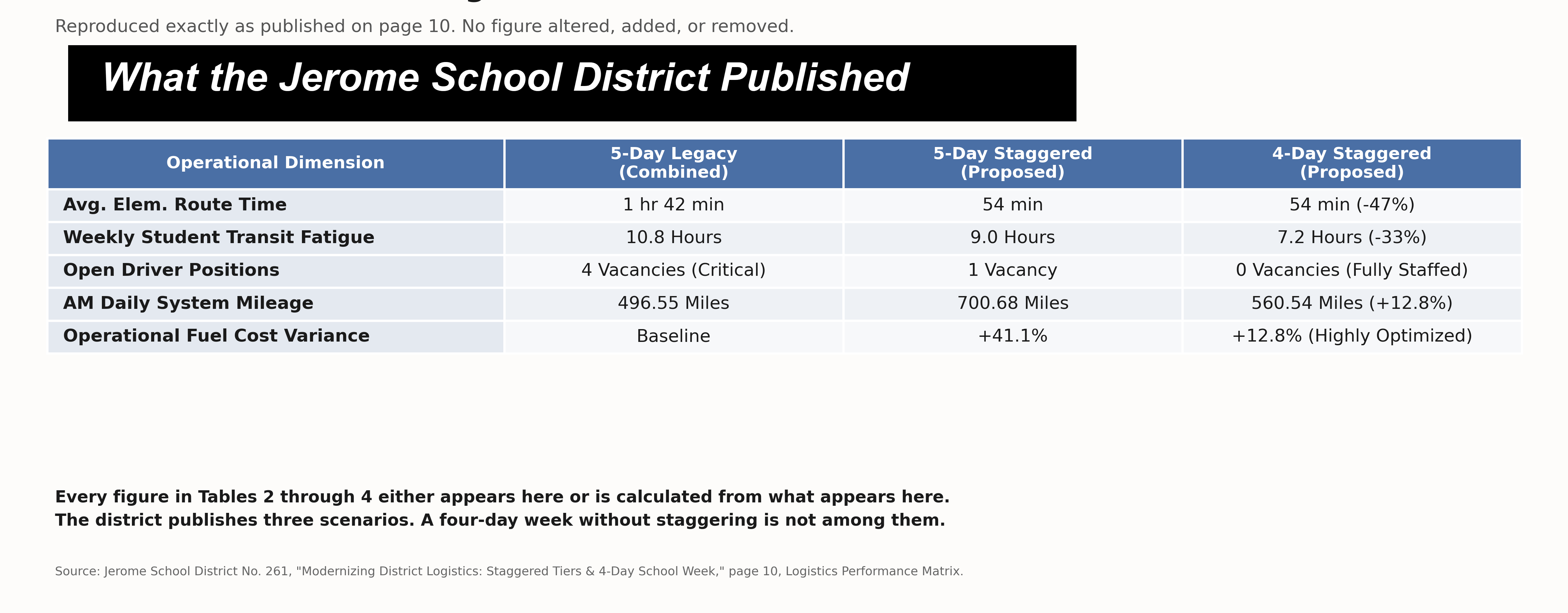
Figure 1. The Logistics Performance Matrix as published by Jerome School District on page 10 of the presentation.
The district published three scenarios: the current five-day system, a five-day staggered system, and a four-day staggered system.[3] A fourth logical scenario was absent: a four-day week using the current non-staggered transportation structure.
The published matrix reports, for the current five-day system, an average elementary route time of 1 hour 42 minutes, weekly student transit time of 10.8 hours, 4 critical driver vacancies, 496.55 miles of AM daily system mileage, and a fuel-cost baseline. For the five-day staggered scenario it reports 54 minutes, 9.0 hours, 1 vacancy, 700.68 miles, and a fuel variance of positive 41.1 percent. For the four-day staggered scenario it reports 54 minutes at negative 47 percent, 7.2 hours at negative 33 percent, zero vacancies described as fully staffed, 560.54 miles at positive 12.8 percent, and a fuel variance of positive 12.8 percent labeled highly optimized.[4]
Two Policies Were Packaged as One
A four-day week and staggered bell tiers are separate policies. A four-day week changes the number of days students attend and buses operate. Staggered tiers change school start and dismissal times so the same buses and drivers can complete sequential runs. The district describes tiers as allowing drivers to stack runs, with elementary service followed directly by secondary service.[5]
The four-day week reduces weekly activity because one operating day disappears. Staggered tiers can reduce the number of buses or drivers required, but may increase mileage on every operating day because buses serve separate school groups in successive waves. The district acknowledges this effect in its own tradeoff slide, which states that spreading the runs elevates the daily cumulative mileage of the active fleet.[6]
When the policies are bundled, the weekly reduction created by the four-day schedule can partially conceal the daily increase created by tiers. The public sees a combined result without being shown the contribution of each decision.
The Missing Comparison
The omitted four-day non-staggered scenario holds the transportation structure constant and changes only the number of weekly operating days. It is the control comparison needed to isolate the effect of the four-day week.
Under that scenario, per-operating-day ride time and mileage remain approximately the same as the current system. Weekly totals fall because buses operate four days instead of five. Bell schedules do not change. Families gain or absorb the effects of the four-day week without also absorbing different daily school times.
The district may have sound reasons to reject that option. It cannot demonstrate those reasons by leaving the option out of the table.
The First Internal Error: Student Time
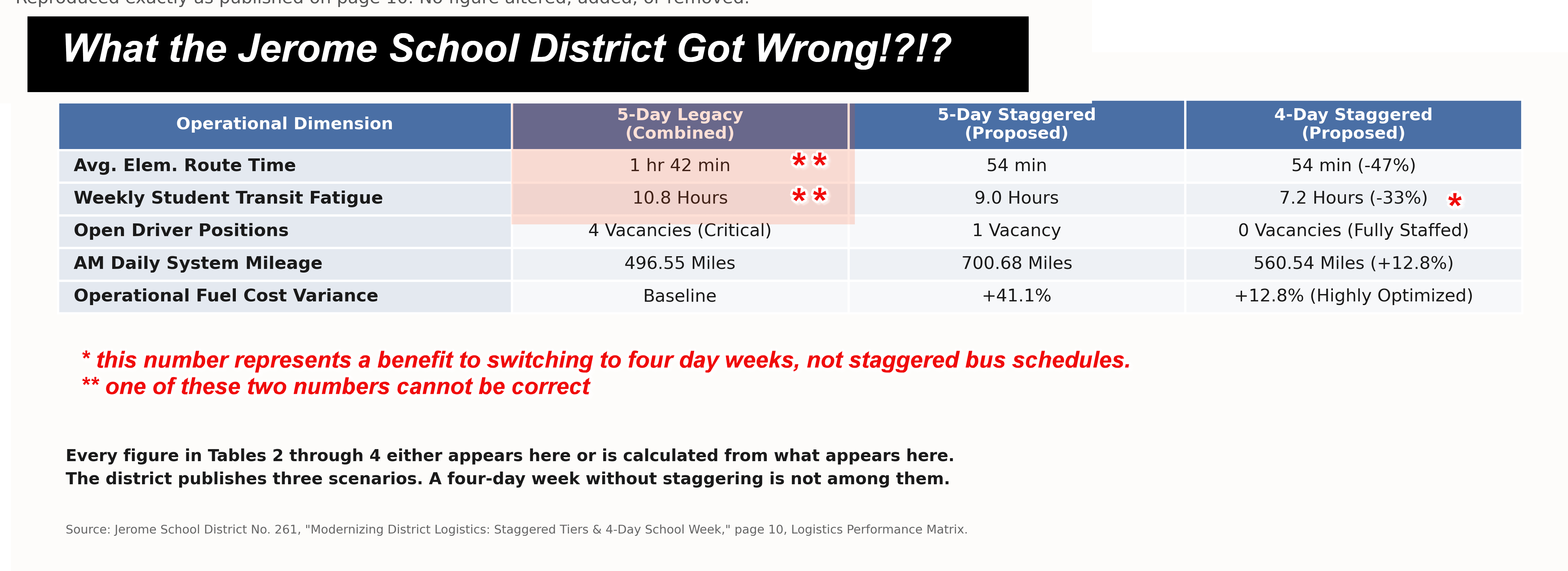
Figure 2. Published inconsistencies and attribution problems identified in red.
The matrix reports an average elementary route time of 1 hour 42 minutes under the current system and weekly student transit time of 10.8 hours.[7] Those figures cannot both describe the same ride-time measure.
The staggered figures reveal the intended relationship. A 54-minute one-way ride, twice per day for five days, produces 9.0 weekly hours. The four-day staggered total of 7.2 hours likewise reflects 54 minutes each way across four days.[8]
Applying that same relationship to the 10.8-hour legacy total produces approximately 64.8 minutes each way, not 102 minutes.[9] Either the 1 hour 42 minute figure is wrong, the 10.8-hour figure is wrong, or the rows describe different populations or measurements without saying so.
The consequence is not cosmetic. The district’s headline claim of a 47 percent reduction in elementary route time depends on the disputed 102-minute value. Measured against the 64.8 minutes implied by the district’s own weekly total, the reduction to 54 minutes is approximately 16.7 percent.[10]
A Third Set of Weekly Figures Appears Earlier in the Same Deck
The inconsistency is not confined to page 10. On page 6, a chart titled “Weekly Cumulative Student Transit Hours” plots 11.0 hours per week for the five-day combined system and 4.4 hours per week for the four-day staggered system, and states that cumulative transit fatigue is reduced by up to 60 percent for elementary students.[11]
Page 10 reports 10.8 hours and 7.2 hours for what appear to be the same two scenarios, a reduction of approximately 33 percent.[12] The two pages of one presentation therefore publish two different baselines, two different four-day staggered totals, and two different reduction percentages. The presentation does not explain the difference.
The Second Error: Daily Mileage Reduced as Though It Were Weekly
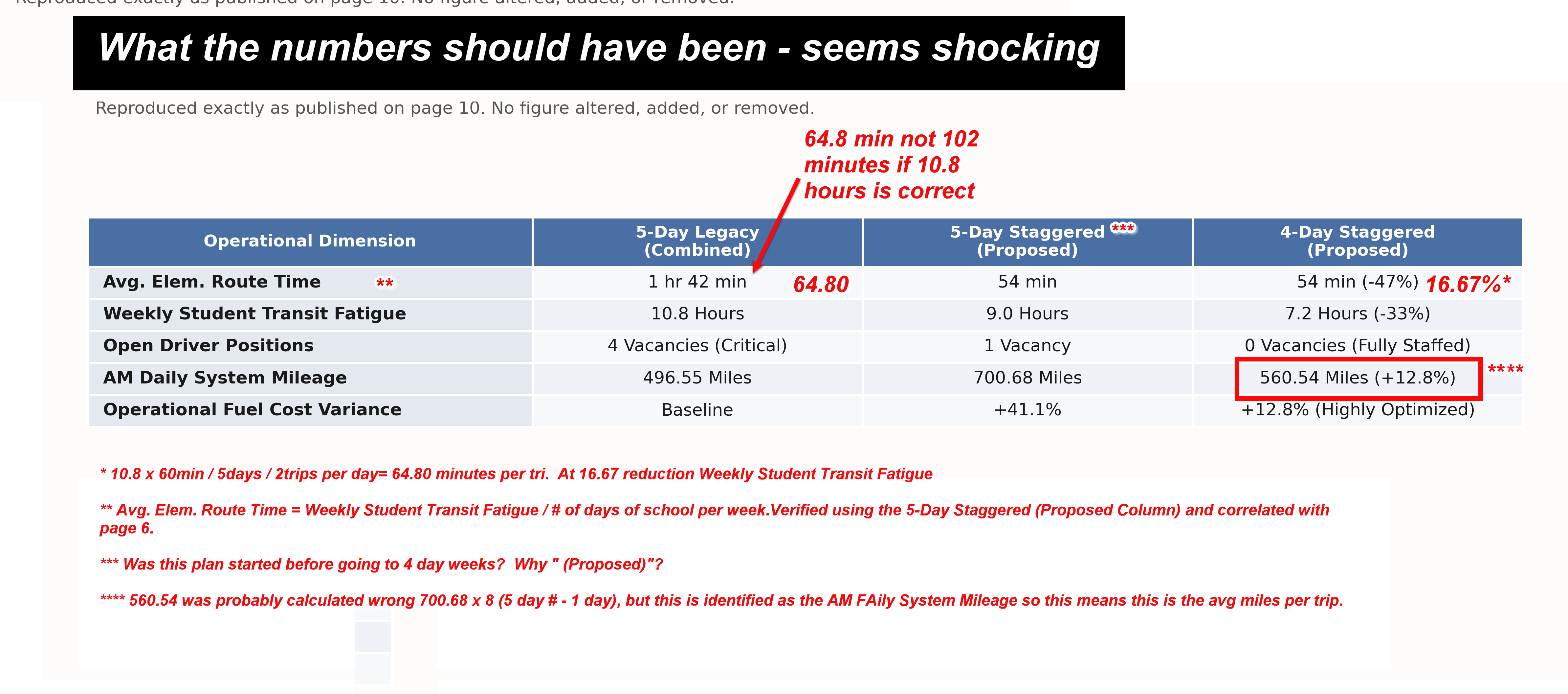
Figure 3. Corrected one-way student time and the daily-mileage anomaly identified in red.
The matrix labels 700.68 miles as “AM Daily System Mileage” under the five-day staggered scenario. In the four-day staggered column, that figure becomes 560.54 miles.[13] The latter number is 80 percent of the daily figure, reflecting four operating days instead of five.[14]
That is the wrong treatment for a daily measurement. If staggered morning operations require 700.68 miles on an operating day, they still require approximately 700.68 miles on each of the four days buses operate. The weekly total changes. The mileage per operating day does not.
The 560.54 figure can be understood as a five-day-equivalent average that spreads four days of mileage across five weekdays. It cannot replace 700.68 in a row labeled daily mileage without changing the unit mid-table.
Important distinction: The district’s positive 41.1 percent figure describes the staggered increase per operating day. The approximately positive 12.8 percent figure can describe the four-day staggered weekly total relative to the five-day legacy week. They are different comparisons.[15]
What 700.68 Miles Actually Measures Is Still Unclear
Even after correcting the reporting period, the 700.68-mile figure remains undefined. “AM Daily System Mileage” may include both morning tiers, only one tier, all morning routes and runs, or additional mileage categories. The presentation does not say.[16]
If the figure includes both morning tiers, the district still must publish corresponding PM mileage before the public can calculate complete-day or annual operating costs. If it represents only part of the morning system, the omission is larger. Deadhead, special transportation, contracted vehicles, support mileage, and reimbursable classifications are also unstated.
Idaho transportation standards require distinctions among routes, runs, run mileage, categorized bus mileage, rider counts, and costs.[17] “System mileage” is too broad to substitute for those records.
What the Corrected Comparison Shows
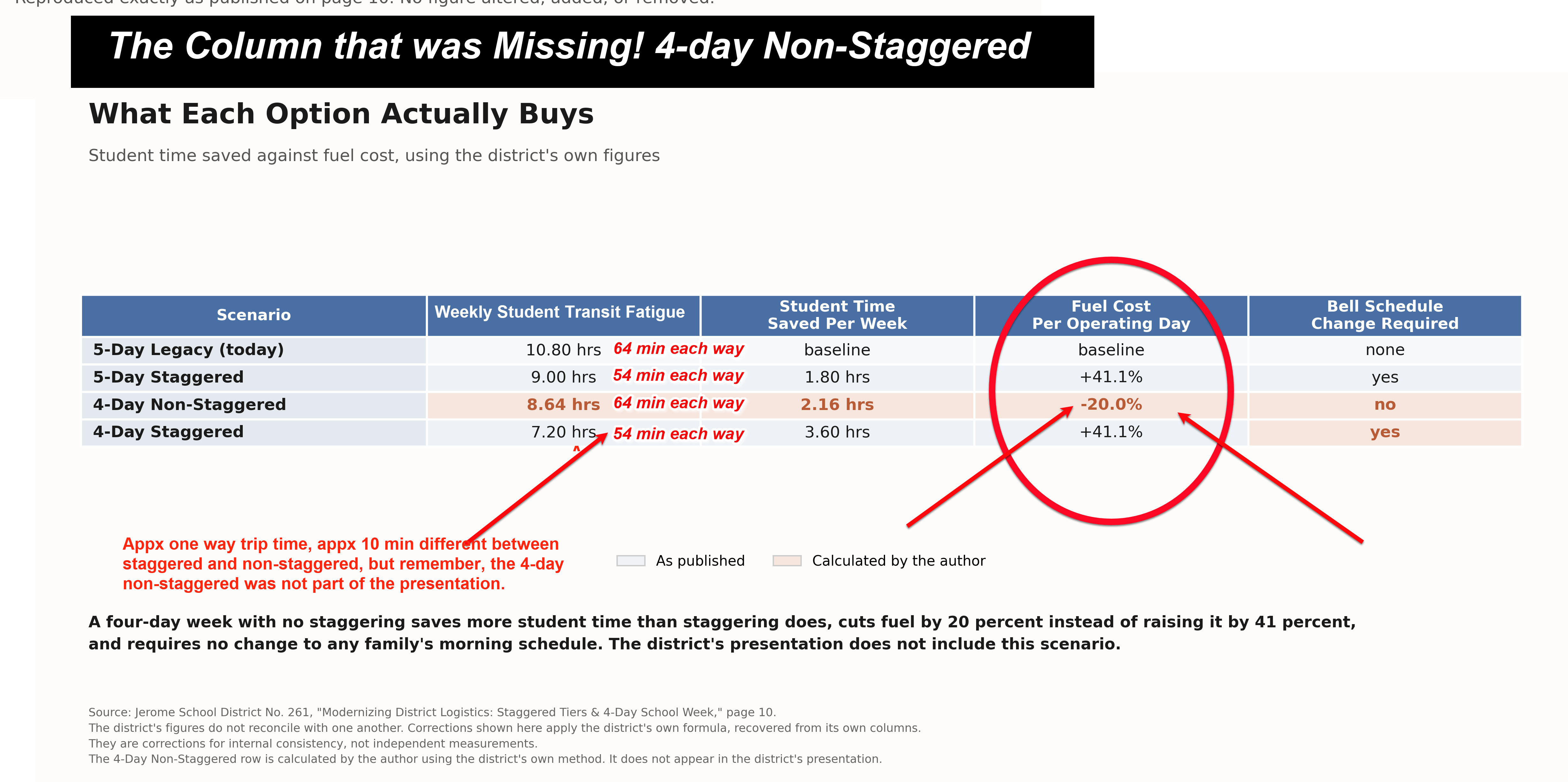
Figure 4. The missing four-day non-staggered scenario and the separation of student-time, fuel, and bell-schedule effects. Values in red are calculated by the author from the district’s published figures.
Using the district’s own weekly student-time method, a four-day non-staggered week produces 8.64 weekly hours, compared with 10.8 under the current five-day system. That is 2.16 hours less weekly transportation time without changing bell schedules.[18]
The five-day staggered scenario reduces the district’s published weekly student time from 10.8 to 9.0 hours, a difference of 1.8 hours.[19] On the district’s own figures, eliminating one school day saves more weekly student transportation time than staggering alone.
The combined four-day staggered scenario produces the lowest weekly student-time total, 7.2 hours, but it also requires staggered bell times and retains the higher staggered mileage on every operating day.[20] Whether that trade is worthwhile is a policy judgment. The table should expose the trade, not bury it.
On fuel, the same reporting-period discipline applies. A four-day non-staggered week leaves fuel use per operating day at the current baseline and reduces the weekly total by 20 percent, because four days is four-fifths of five.[21] A four-day staggered week retains the positive 41.1 percent increase on every operating day and produces a weekly total roughly 12.9 percent above the current five-day week.[22]
The Effects on Families
Transportation efficiency for the district can become schedule inefficiency for families. Different start and dismissal times affect when children wake, when parents leave for work, whether siblings can travel together, who supervises children before and after school, and whether students can participate in jobs, athletics, music, church, 4-H, FFA, or farm responsibilities. The district’s own materials acknowledge that families must adjust morning and afternoon drop-off times.[23]
The four-day week creates a separate set of effects: childcare on the fifth day, longer school days, meals, special services, lost work time, and transportation to fifth-day programs. Families may support one policy and oppose the other. A combined question cannot capture those positions accurately.
These are not secondary inconveniences to be considered after the operational model is selected. They are costs. The district budget may not pay them, but families will.
Idaho’s Routing Framework
Idaho law places route decisions with the Board of Trustees and makes the safety and adequate protection of the health of pupils the primary requirements to be observed in approving the routing of any school bus.[24] Routes and non-transportation zones are annual Board decisions that must be determined for each year not later than the regular August meeting of the board.[25] State standards require written policies and accurate records of routes, runs, mileage, rider counts, and related costs.[26]
Transportation is generally not required for pupils living less than one and one-half miles from the nearest appropriate school, although the board may transport a pupil a lesser distance when in its judgment the age or health or safety of the pupil warrants.[27] Where practical, routes must be established so that no bus stop is more than one and one-half miles from the intersection of the pupil’s home driveway and the nearest public road.[28] Buses may not be operated in excess of the maximum occupancy determined by the manufacturer, and may not be operated by a person without a current commercial driver’s license and the minimum training prescribed by the state board of education.[29] Drivers must maintain route books and report hazardous conditions on or bordering a route.[30]
The presentation does not show route maps, run sheets, stop lists, safety-busing determinations, ride-time distributions, ridership counts, route-book data, full-day mileage, or reimbursement classifications.[31] Their absence from the presentation does not prove the district lacks them. It does mean the public presentation does not demonstrate that the model rests on them.
Idaho does not prohibit a four-day week or a tiered bell schedule. The Idaho State Department of Education states plainly that there is currently nothing in Idaho Code that addresses the length of school bus rides.[32] The Board’s broader safety and health duty therefore matters more, not less. The Board must establish the local limits it considers acceptable and explain why.
National Lessons
National research does not support treating the four-day week as a proven solution for attendance, staffing, or finances.
RAND’s study of 36 districts across Idaho, New Mexico, and Oklahoma, the largest of its kind at the time, found mixed results. Stakeholder satisfaction was high and families appreciated the added flexibility, but cost savings related to the four-day model were relatively small.[33] The most recent multi-state, student-level analysis, using NWEA MAP Growth data across six states, estimates significant negative effects on spring reading achievement of 0.07 standard deviations and on fall-to-spring gains of 0.05 standard deviations in math and 0.06 in reading, with larger negative effects in non-rural schools.[34] Overall budget savings in the wider literature commonly fall in the range of 1 to 3 percent and depend on which services actually stop on the fifth day.[35]
Research on staffing is mixed. Teachers may value the schedule, but recent causal work does not establish a dependable reduction in turnover.[36]
Tiered routing can reduce fleet and driver requirements by allowing a bus to complete multiple runs, and optimization research shows that routes and start times can be solved together rather than sequentially.[37] Tiering can also increase mileage, extend the transportation window, and force some grade levels into earlier or later bell times. In 2014 the American Academy of Pediatrics recommended that middle schools and high schools start no earlier than 8:30 a.m. to allow adolescents to get the sleep they need, a position the CDC reports has since been supported by the American Medical Association and the American Academy of Sleep Medicine.[38] Tier order is therefore a health decision as well as a transportation decision.
What the Board Should Require
• A corrected matrix using consistent units and definitions.
• All four scenarios, including four-day non-staggered.
• Separate AM, PM, complete-day, weekly, and annual mileage.
• Route-level and run-level mileage, loads, stops, times, and recovery margins.
• Average, median, 90th-percentile, and maximum student ride times by school and grade level.
• Actual annual costs in dollars, including reimbursable and non-reimbursable categories.
• Exact proposed bell times and tier order.
• A family survey using the actual proposed calendar and bell times.
• A pilot, a public dashboard, rollback triggers, and a sunset requiring affirmative reauthorization.
Most importantly, the Board should vote separately on the four-day week, staggered tiers, and the actual annual routes. Each decision should stand on its own evidence.
Conclusion
The missing column is more than an empty space in a table. It is the option that reveals what the four-day week accomplishes without staggering, what staggering adds on every operating day, and which burdens belong to each policy.
The district’s presentation may have been intended as an early operational overview. It is not adequate as a final decision document. One student-time figure does not reconcile. A second set of weekly figures on page 6 does not match page 10. One daily-mileage figure was reduced as though it were weekly. Key terms are undefined. Full-day mileage is absent. The control scenario is missing. Family effects are asserted rather than measured.
The answer is not to reject every change. The answer is to complete the comparison. Correct the numbers. Define the units. Publish the routes. Survey families using the real schedule. Establish measurable standards. Then let the Board and the public decide whether each proposal earns a passing grade.
How the Calculations Were Done
Every figure in this article is either published by the district or derived from published district figures using the district’s own method. No independent field measurement was performed. Where a value is author-derived, it is identified as such.
1. Recovering one-way student ride time from weekly totals
The district’s weekly student-time row and its route-time row are linked by a fixed relationship: one-way minutes multiplied by two trips per day multiplied by the number of school days equals weekly minutes.
Testing that relationship against the district’s staggered columns confirms it:
• Five-day staggered: 54 minutes x 2 trips x 5 days = 540 minutes = 9.0 hours. Matches the published 9.0.
• Four-day staggered: 54 minutes x 2 trips x 4 days = 432 minutes = 7.2 hours. Matches the published 7.2.
Applying the same relationship in reverse to the legacy weekly total:
• 10.8 hours x 60 = 648 minutes. 648 / (2 trips x 5 days) = 64.8 minutes one way.
The published legacy route time of 1 hour 42 minutes equals 102 minutes. The two published legacy values cannot both be correct.
2. Recomputing the elementary route-time reduction
• Against the published 102 minutes: (102 - 54) / 102 = 47.1 percent, which matches the district’s negative 47 percent.
• Against the derived 64.8 minutes: (64.8 - 54) / 64.8 = 16.7 percent.
3. Constructing the missing four-day non-staggered scenario
The scenario holds the current, non-staggered transportation structure constant and changes only the number of weekly operating days from five to four. Measurements stated as weekly totals become 80 percent of the five-day value, because four operating days are four-fifths of five. Measurements stated per operating day are unchanged. Bell schedules are unchanged.
• Weekly student time: 64.8 minutes x 2 trips x 4 days = 518.4 minutes = 8.64 hours.
• Student time saved per week: 10.8 - 8.64 = 2.16 hours.
• AM mileage per operating day: 496.55 miles, unchanged.
• Weekly AM mileage: 496.55 x 4 = 1,986.20 miles, against 496.55 x 5 = 2,482.75 miles for the current week, a reduction of 20.0 percent.
4. Student time saved per week, all four scenarios
• Five-day legacy: baseline, 10.8 hours.
• Five-day staggered: 10.8 - 9.0 = 1.80 hours saved.
• Four-day non-staggered: 10.8 - 8.64 = 2.16 hours saved.
• Four-day staggered: 10.8 - 7.2 = 3.60 hours saved.
5. Showing that 560.54 is a weekly reduction applied to a daily row
• 700.68 x 0.8 = 560.544, which rounds to the published 560.54.
• Weekly AM mileage, five-day staggered: 700.68 x 5 = 3,503.40 miles.
• Weekly AM mileage, four-day staggered: 700.68 x 4 = 2,802.72 miles.
• Five-day-equivalent average of the four-day week: 2,802.72 / 5 = 560.544 miles.
The 560.54 value is therefore a five-day-equivalent weekly average, not a per-operating-day figure. Reducing the number of weekly operating days does not reduce the miles traveled on each operating day.
6. Separating daily and weekly fuel comparisons
Fuel percentages in the presentation appear to be derived from mileage. On that basis:
• Five-day staggered, per operating day: 700.68 / 496.55 = 1.411, or positive 41.1 percent. This matches the district’s figure.
• Five-day staggered, per week: 3,503.40 / 2,482.75 = 1.411, or positive 41.1 percent. Identical, because the number of days is unchanged.
• Four-day non-staggered, per operating day: unchanged baseline. Per week: 1,986.20 / 2,482.75 = 0.800, or negative 20.0 percent.
• Four-day staggered, per operating day: positive 41.1 percent. Per week: 2,802.72 / 2,482.75 = 1.129, or approximately positive 12.9 percent.
The district’s positive 12.8 percent is close to the recomputed weekly value of positive 12.9 percent, which supports the conclusion that it is a weekly comparison placed in a row labeled daily.
7. Limitations of these calculations
These calculations preserve the district’s published inputs and correct their internal treatment. They do not independently validate the district’s source data. They do not resolve whether “AM Daily System Mileage” includes both morning tiers, whether it includes deadhead mileage, whether afternoon mileage is comparable, or whether the reported fuel percentages include factors beyond mileage. Those questions require district definitions and source records. Percentages derived from mileage alone are mileage-based estimates of fuel use, not complete fuel-cost calculations, because they do not account for fuel price, vehicle fuel economy, idling, route speed, or fleet mix.
Copyright 2026, Jeff A Pierson. Figures 1 through 4 reproduce and annotate page 10 of the Jerome School District presentation. Values shown in red in Figures 2, 3, and 4 are author-derived corrections and were not published by the district.
Footnotes:
[1] Jerome School District No. 261, “Modernizing District Logistics: Staggered Tiers & 4-Day School Week,” presentation to the Board of Trustees, July 8, 2026, 14 pages. Original author metadata: Tim Hicks.
[2] Jerome School District No. 261, “Modernizing District Logistics: Staggered Tiers & 4-Day School Week,” page 10, Logistics Performance Matrix.
[3] Jerome School District No. 261, “Modernizing District Logistics: Staggered Tiers & 4-Day School Week,” page 10, Logistics Performance Matrix.
[4] Jerome School District No. 261, “Modernizing District Logistics: Staggered Tiers & 4-Day School Week,” page 10, Logistics Performance Matrix.
[5] Jerome School District No. 261, “Modernizing District Logistics,” page 3, “Solving Jerome’s Driver Shortage,” describing 32 to 36 contiguous hours per week and stacked runs with elementary followed directly by secondary.
[6] Jerome School District No. 261, “Modernizing District Logistics,” page 8, “Evaluating District Tradeoffs,” listing increased daily runs, schedule adjustments for families, and coordinated timing between elementary and secondary bell times.
[7] Jerome School District No. 261, “Modernizing District Logistics: Staggered Tiers & 4-Day School Week,” page 10, Logistics Performance Matrix.
[8] Author calculation from the figures published on page 10 of the district presentation. See the section “How the Calculations Were Done,” items 1 and 2.
[9] Author calculation from the figures published on page 10 of the district presentation. See the section “How the Calculations Were Done,” items 1 and 2.
[10] Author calculation from the figures published on page 10 of the district presentation. See the section “How the Calculations Were Done,” items 1 and 2.
[11] Jerome School District No. 261, “Modernizing District Logistics,” page 6, “Weekly Cumulative Student Transit Hours.”
[12] Jerome School District No. 261, “Modernizing District Logistics: Staggered Tiers & 4-Day School Week,” page 10, Logistics Performance Matrix.
[13] Jerome School District No. 261, “Modernizing District Logistics: Staggered Tiers & 4-Day School Week,” page 10, Logistics Performance Matrix.
[14] Author calculation from the figures published on page 10 of the district presentation. See “How the Calculations Were Done,” items 5 and 6.
[15] Author calculation from the figures published on page 10 of the district presentation. See “How the Calculations Were Done,” items 5 and 6.
[16] Jerome School District No. 261, “Modernizing District Logistics: Staggered Tiers & 4-Day School Week,” page 10, Logistics Performance Matrix.
[17] Idaho Department of Education, Standards for Idaho School Buses and Operations, provisions governing routes, runs, run mileage, categorized bus mileage, rider counts, and transportation costs. The standards are incorporated by reference into State Board of Education rule at IDAPA 08.02.02.004. Manual: https://sde.idaho.gov/wp-content/uploads/2025/10/SISBO-Manual.pdf and https://boardofed.idaho.gov/meetings/board/Administrative%20Rules/Incorporated%20by%20Reference%20Documents/2024-2025/1%20-%20SISBO%20Manual.pdf Rule: https://adminrules.idaho.gov/rules/current/08/080202.pdf
[18] Author calculation from the figures published on page 10 of the district presentation. See “How the Calculations Were Done,” items 3 and 4.
[19] Jerome School District No. 261, “Modernizing District Logistics: Staggered Tiers & 4-Day School Week,” page 10, Logistics Performance Matrix.
[20] Jerome School District No. 261, “Modernizing District Logistics: Staggered Tiers & 4-Day School Week,” page 10, Logistics Performance Matrix.
[21] Author calculation from the figures published on page 10 of the district presentation. See “How the Calculations Were Done,” item 6.
[22] Author calculation from the figures published on page 10 of the district presentation. See “How the Calculations Were Done,” item 6.
[23] Jerome School District No. 261, “Modernizing District Logistics,” page 8, “Evaluating District Tradeoffs,” listing increased daily runs, schedule adjustments for families, and coordinated timing between elementary and secondary bell times.
[24] Idaho Code section 33-1501, Transportation authorized. https://legislature.idaho.gov/statutesrules/idstat/title33/t33ch15/sect33-1501/
[25] Idaho Code section 33-1502, Bus routes and non-transportation zones. https://legislature.idaho.gov/statutesrules/idstat/title33/t33ch15/sect33-1502/
[26] Idaho Department of Education, Standards for Idaho School Buses and Operations, provisions governing routes, runs, run mileage, categorized bus mileage, rider counts, and transportation costs. The standards are incorporated by reference into State Board of Education rule at IDAPA 08.02.02.004. Manual: https://sde.idaho.gov/wp-content/uploads/2025/10/SISBO-Manual.pdf and https://boardofed.idaho.gov/meetings/board/Administrative%20Rules/Incorporated%20by%20Reference%20Documents/2024-2025/1%20-%20SISBO%20Manual.pdf Rule: https://adminrules.idaho.gov/rules/current/08/080202.pdf
[27] Idaho Code section 33-1501, Transportation authorized. https://legislature.idaho.gov/statutesrules/idstat/title33/t33ch15/sect33-1501/
[28] Idaho Code section 33-1502, Bus routes and non-transportation zones. https://legislature.idaho.gov/statutesrules/idstat/title33/t33ch15/sect33-1502/
[29] Idaho Code section 33-1508, Operation of school buses. https://legislature.idaho.gov/statutesrules/idstat/title33/t33ch15/sect33-1508/
[30] Idaho Code section 33-1509, School bus drivers, definition, qualification, duties. https://legislature.idaho.gov/statutesrules/idstat/title33/t33ch15/sect33-1509/
[31] Jerome School District No. 261, “Modernizing District Logistics: Staggered Tiers & 4-Day School Week,” presentation to the Board of Trustees, July 8, 2026, 14 pages. Original author metadata: Tim Hicks.
[32] Idaho State Department of Education, Student Transportation, frequently asked questions. In answer to whether the State has limits on how long a bus ride can be for students, the Department states that there is currently nothing in Idaho Code that addresses the length of school bus rides. https://www.sde.idaho.gov/about-us/departments/student-transportation/
[33] M. Rebecca Kilburn, Andrea Phillips, Celia J. Gomez, Louis T. Mariano, Christopher Joseph Doss, Wendy M. Troxel, Emily Morton, and Kevin Estes, Does Four Equal Five? Implementation and Outcomes of the Four-Day School Week, RAND Corporation, RR-A373-1, 2021. https://www.rand.org/pubs/research_reports/RRA373-1.html
[34] Emily Morton, Paul N. Thompson, and Megan Kuhfeld, “A Multi-State, Student-Level Analysis of the Effects of the Four-Day School Week on Student Achievement and Growth,” EdWorkingPaper 22-630, Annenberg Institute at Brown University, 2023, published in Economics of Education Review, volume 100, 2024. https://doi.org/10.26300/p96h-8a41
[35] Michigan Department of Education, Study on District Transportation Costs, 2024. https://www.michigan.gov/mde/-/media/Project/Websites/mde/ohns/School-Health-and-Safety/Troy_Transportation-Cost-Study-Report.pdf
[36] U.S. Institute of Education Sciences, Regional Educational Laboratory Northwest, “Ask an Expert: Implications of a Four-Day School Week in a Rural Community,” 2023, summarizing the mixed research base on achievement, attendance, finance, and staffing. https://ies.ed.gov/learn/blog/ask-expert-implications-four-day-school-week-rural-community
[37] Dimitris Bertsimas, Arthur Delarue, and Sebastien Martin, “Optimizing Schools’ Start Time and Bus Routes,” Proceedings of the National Academy of Sciences, volume 116, number 13, 2019, pages 5943 to 5948. https://www.pnas.org/doi/full/10.1073/pnas.1811462116
[38] Centers for Disease Control and Prevention, “Sleep and Health,” reporting the 2014 American Academy of Pediatrics recommendation that middle schools and high schools start no earlier than 8:30 a.m., and subsequent statements of support from the American Medical Association and the American Academy of Sleep Medicine. https://www.cdc.gov/physical-activity-education/staying-healthy/sleep.html